ICC Women’s World Cup 2025: Complete Schedule & Best Recap
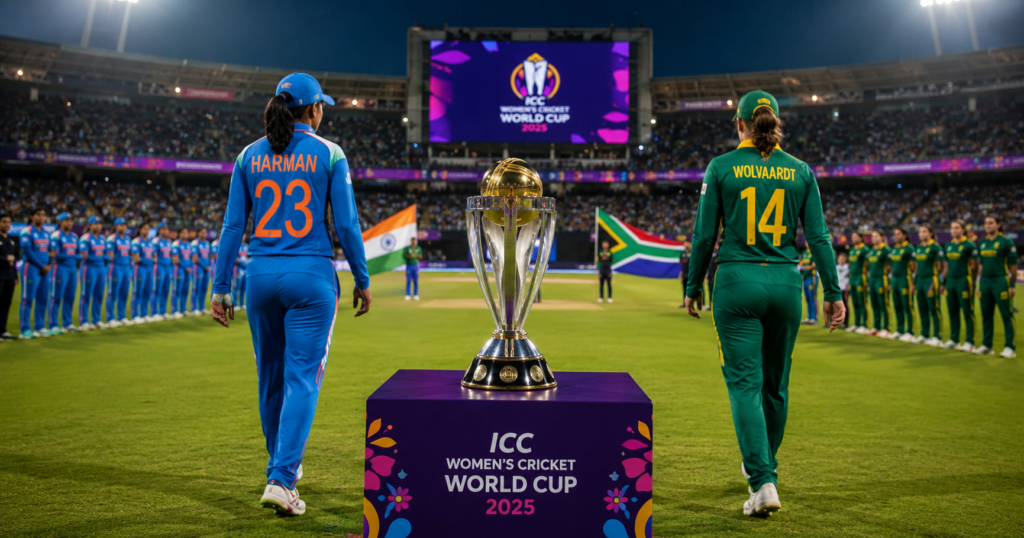
ICC Women’s World Cup 2025: Schedule, Points Table & Everything That Happened For a tournament that started with fairly modest expectations — an eighth edition on the calendar, another round of the usual suspects at the top — the 2025 ICC Women’s World Cup ended up being one of the more memorable editions in the competition’s history. India lifted their first-ever Women’s World Cup title on home soil, a chase for the trophy that had gone on for over five decades since the country’s women’s team first competed in the tournament. If you missed parts of it, or you’re going back to check specific results, schedules or standings, here’s the complete picture — how the tournament was structured, what actually happened match by match through the group stage, and how the knockouts played out. Quick Overview The 2025 edition was the 13th Women’s Cricket World Cup overall, and it ran from 30 September to 2 November 2025. India and Sri Lanka co-hosted the tournament together, which was itself a first for the competition — matches were split across five venues: Guwahati, Indore, Visakhapatnam and Navi Mumbai in India, and Colombo in Sri Lanka. Eight teams took part: India, Australia, England, South Africa, New Zealand, Pakistan, Bangladesh and Sri Lanka. West Indies, who’d reached the semi-finals just three years earlier in 2022, failed to qualify this time — the first time they’d missed out on a Women’s World Cup since it became an ICC-run event. Bangladesh and Pakistan came through a qualifier tournament held in Pakistan earlier in the year to book their spots. How the Format Worked The tournament followed the structure that’s become standard for this event: a round-robin group stage followed by knockouts. All eight teams played each other once across the group phase, which worked out to 28 matches, before the top four sides on the points table advanced to the semi-finals. From there it was a straightforward knockout — two semi-finals, then the final. Each group-stage win was worth two points, same as most 50-over tournaments run this way, with net run rate used as the tiebreaker for sides finishing level on points. That net run rate calculation ended up mattering more than usual this year, with a couple of the semi-final spots decided on fine margins rather than being settled well in advance. Final Points Table (Group Stage) Here’s how the standings looked once the round-robin phase wrapped up, before the tournament moved into the knockout rounds: Position Team Matches Wins Points 1 South Africa 7 5 10 2 India 7 5 10 3 Australia 7 5 10 4 England 7 4 8 5 New Zealand 7 3 6 6 Bangladesh 7 2 4 7 Pakistan 7 1 2 8 Sri Lanka 7 1 2 The top three sides on the table finished level on points, which made net run rate the deciding factor for seeding going into the semi-finals — a reminder of just how tightly contested this group stage actually was, especially near the top. Semi-Finals and Final India and Australia met in one semi-final, with South Africa taking on England in the other. India came through their semi-final to set up a final against South Africa, who’d knocked out England in the other last-four match. The final itself, played in Navi Mumbai, ended with India completing a chase to win their maiden Women’s World Cup title — a genuinely historic result for a program that had come agonisingly close before, including a runners-up finish in the very first edition of the tournament back in the 1970s and another final appearance since. South Africa, appearing in their first-ever Women’s World Cup final, finished as runners-up. Standout Performers A few individual performances defined the tournament. Laura Wolvaardt of South Africa was the leading run-scorer of the whole competition, finishing with 571 runs — comfortably the highest tally of any batter across the tournament. India’s Deepti Sharma had arguably the tournament of her career, finishing as the leading wicket-taker with 22 dismissals and also picking up the Player of the Tournament award for her all-round contribution with bat and ball through the knockouts. Australia’s Annabel Sutherland and England’s Sophie Ecclestone also featured near the top of the wicket-taking charts, while India’s Smriti Mandhana and Jemimah Rodrigues both had strong tournaments with the bat, contributing heavily to India’s run through the group stage and knockouts. Why This World Cup Mattered Australia had gone into the tournament as defending champions, having won their seventh title back in 2022 in New Zealand. That dominance made this edition’s result feel especially significant — it wasn’t just India winning a World Cup, it was the tournament producing a genuinely new champion for the first time in a while, on a stage where Australia have usually been the team to beat. There’s also the co-hosting arrangement itself, which worked well enough that it’s likely to influence how future multi-nation events in the region get planned. Splitting matches between India and Sri Lanka gave the tournament a wider footprint than a single-host edition typically has, and it meant travelling fans and broadcasters got exposure to venues and crowds in both countries rather than just one. What Comes Next With the 2025 edition now complete, the women’s international calendar moves on to bilateral series and the next cycle of ICC events, including the Women’s Championship structure that determines qualification pathways for the next World Cup. For the latest team standings following the tournament, the official rankings page is the place to check how results from the World Cup shifted the wider ODI table. If you want to follow the schedule of what’s coming up next across formats, the full fixtures list covers upcoming series for all the major teams. For readers who want the tournament’s official archive — full scorecards, squad lists and match-by-match detail exactly as recorded — the ICC’s official website is the authoritative source, and ESPNcricinfo’s tournament coverage carries ball-by-ball detail and statistics for every match played. Recapping the