ICC Women’s World Cup 2025 Teams
Eight teams participated in the ICC Women’s World Cup 2025, representing the strongest cricket nations in women’s ODI cricket.
The participating teams were:
- India
- Australia
- England
- South Africa
- New Zealand
- Pakistan
- Bangladesh
- Sri Lanka
Each team played against every other side once during the group stage. The top four teams in the points table qualified for the semi-finals.
India
India entered the tournament with strong expectations, especially with home advantage. Led by Harmanpreet Kaur, the team produced consistent performances throughout the competition.
India’s batting strength, combined with their bowling attack, helped them reach the final and secure their first Women’s World Cup trophy.
Australia
Australia started the tournament as defending champions after winning the 2022 edition. Known for their dominance in women’s cricket, they remained one of the strongest teams throughout the competition.
Although Australia had several impressive performances, they could not defend their title in 2025.
England
England remained one of the most competitive sides in the tournament. Their experienced players and balanced squad helped them reach the knockout stage.
The team showed strong performances during the group matches but missed out on reaching the final.
South Africa
South Africa had a historic campaign in the ICC Women’s World Cup 2025. They reached their first-ever Women’s World Cup final after impressive performances throughout the tournament.
Laura Wolvaardt played a key role with the bat and finished as the leading run-scorer.
New Zealand
New Zealand brought valuable experience to the tournament. As former Women’s World Cup champions, they entered the competition with a strong cricketing background.
Pakistan
Pakistan qualified for the tournament through the qualification pathway and represented the growing strength of women’s cricket in the country.
Bangladesh
Bangladesh secured their place through the qualifiers and continued their development on the international stage.
Sri Lanka
As co-hosts, Sri Lanka played in front of home supporters and contributed to a memorable tournament atmosphere.
ICC Women’s World Cup 2025 Schedule & Fixtures
The ICC Women’s World Cup 2025 schedule featured 31 matches played across the group stage and knockout rounds. The tournament started on 30 September 2025 and concluded with the final on 2 November 2025. India and Sri Lanka hosted the competition, with matches taking place across multiple international cricket venues.
The group stage followed a round-robin format where all eight teams played against each other once. The top four teams in the points table progressed to the semi-finals.
ICC Women’s World Cup 2025 Key Fixtures
| Stage | Match | Date |
| Opening Match | India Women vs Sri Lanka Women | 30 September 2025 |
| Group Stage | All teams played seven matches each | September – October 2025 |
| Semi Final 1 | Top teams from points table | 29 October 2025 |
| Semi Final 2 | Top teams from points table | 30 October 2025 |
| Final | Winner SF1 vs Winner SF2 | 2 November 2025 |
The complete official fixture list included all group matches, knockout games, and results from the tournament.
ICC Women’s World Cup 2025 Venues
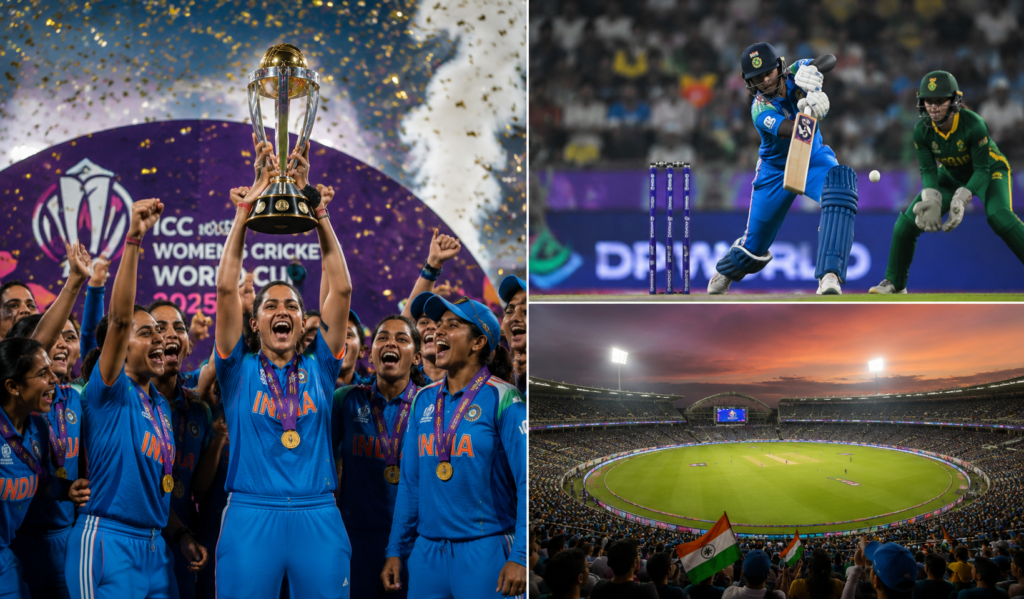
The ICC Women’s World Cup 2025 was hosted by India and Sri Lanka, making it a historic edition with matches played across both countries. The tournament used five main venues to provide fans from different regions the opportunity to watch international women’s cricket.
Major Tournament Venues
India Venues
Guwahati
- Hosted important group-stage matches
- One of the opening venues of the tournament
Indore
- Known for its excellent cricket facilities
- Hosted several high-scoring matches
Visakhapatnam
- Hosted important league-stage fixtures
Navi Mumbai
- Hosted major knockout matches, including the final
Sri Lanka Venue
Colombo
- Hosted matches involving Pakistan and other teams
- Provided a neutral venue option during the tournament
The multi-country hosting arrangement helped expand the reach of women’s cricket and allowed more fans to experience World Cup matches.
ICC Women’s World Cup 2025 Format
The tournament followed a simple and competitive ODI World Cup structure.
Group Stage
All eight teams competed in a single round-robin format.
Each team played:
- 7 group-stage matches
- 1 match against every other team
Teams received:
- 2 points for a win
- 1 point for no result
- 0 points for a loss
If teams finished level on points, Net Run Rate (NRR) was used as the deciding factor.
Knockout Stage
After the group matches:
- Top four teams qualified for the semi-finals
- Winners advanced to the final
- The final decided the World Cup champion
This format ensured that every match remained important because teams had limited opportunities to recover after losses.
ICC Women’s World Cup 2025 Points Table
The group stage produced a highly competitive points table, with several teams fighting closely for semi-final qualification.
| Position | Team | Matches | Wins | Points |
| 1 | South Africa | 7 | 5 | 10 |
| 2 | India | 7 | 5 | 10 |
| 3 | Australia | 7 | 5 | 10 |
| 4 | England | 7 | 4 | 8 |
| 5 | New Zealand | 7 | 3 | 6 |
| 6 | Bangladesh | 7 | 2 | 4 |
| 7 | Pakistan | 7 | 1 | 2 |
| 8 | Sri Lanka | 7 | 1 | 2 |
South Africa, India, and Australia all finished with 10 points, making Net Run Rate a crucial factor in determining positions before the knockout stage.
ICC Women’s World Cup 2025 Semi-Finals and Final Recap
The knockout stage delivered some of the most memorable moments of the tournament.
Semi-Finals
India faced Australia in one semi-final, while South Africa played England in the other.
India continued their strong tournament form and secured a place in the final.
South Africa also created history by reaching their first-ever Women’s World Cup final after defeating England.
ICC Women’s World Cup 2025 Final
The final was played between:
India Women vs South Africa Women
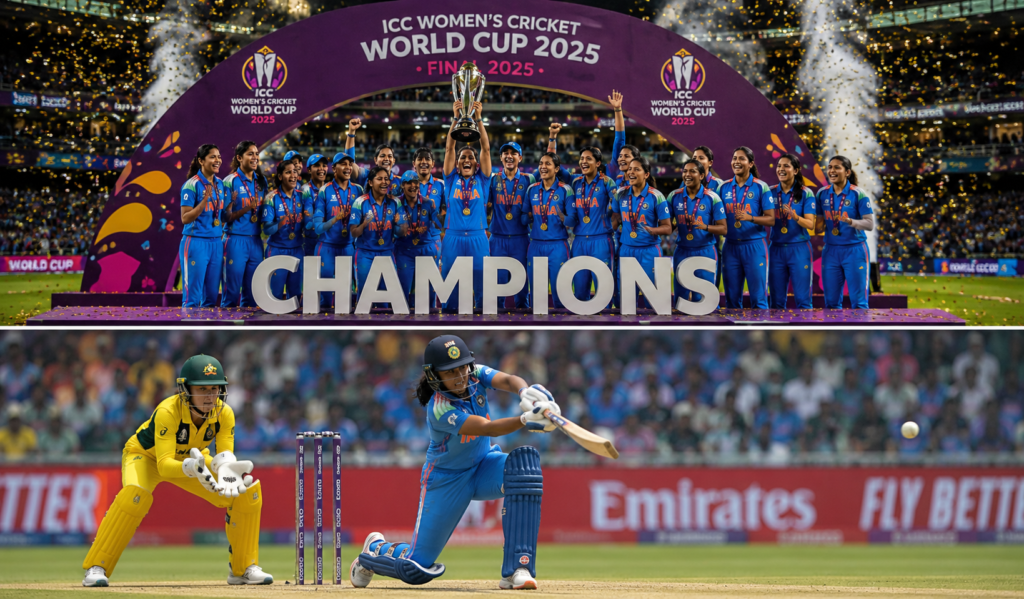
India produced a historic performance and won their first-ever Women’s Cricket World Cup title.
The victory was especially significant because India had previously reached World Cup finals but had never lifted the trophy.
South Africa finished as runners-up after an outstanding campaign that saw them reach their first World Cup final.
ICC Women’s World Cup 2025 Players to Watch
Several players delivered exceptional performances throughout the tournament.
Laura Wolvaardt (South Africa)
Laura Wolvaardt was one of the standout batters of the competition. She finished as the leading run-scorer with 571 runs, playing a key role in South Africa’s historic journey to the final.
Deepti Sharma (India)
Deepti Sharma was one of India’s most influential players. Her all-round performances helped India during crucial knockout matches, and she finished as the leading wicket-taker with 22 wickets while winning Player of the Tournament.
Smriti Mandhana (India)
Smriti Mandhana remained one of India’s biggest batting strengths. Her ability to score quickly at the top of the order made her one of the most important players for India.
Alyssa Healy (Australia)
As an experienced international player, Alyssa Healy continued to be a key figure in Australia’s batting lineup.
Nat Sciver-Brunt (England)
Nat Sciver-Brunt’s consistency with both bat and leadership made her one of England’s most valuable players.
ICC Women’s World Cup Previous Winners
The ICC Women’s Cricket World Cup has a rich history dating back to 1973. Over the years, the tournament has produced some of the greatest moments in women’s cricket and helped grow the sport worldwide.
Australia has been the most successful team in Women’s World Cup history, winning the trophy multiple times. England and New Zealand have also lifted the title, while India created history by winning their first-ever Women’s World Cup trophy in 2025.
Women’s Cricket World Cup Winners List
| Year | Host | Winner | Runner-up |
| 1973 | England | England | Australia |
| 1978 | India | Australia | England |
| 1982 | New Zealand | Australia | England |
| 1988 | Australia | Australia | England |
| 1993 | England | England | New Zealand |
| 1997 | India | Australia | New Zealand |
| 2000 | New Zealand | New Zealand | Australia |
| 2005 | South Africa | Australia | India |
| 2009 | Australia | England | New Zealand |
| 2013 | India | Australia | West Indies |
| 2017 | England | England | India |
| 2022 | New Zealand | Australia | England |
| 2025 | India & Sri Lanka | India | South Africa |
ICC Women’s World Cup 2025 Records & Highlights
The ICC Women’s World Cup 2025 produced several memorable records and achievements that made the tournament special.
India Won Their First Women’s World Cup Title
India achieved a historic milestone by winning their maiden Women’s Cricket World Cup trophy. After previous final defeats in 2005 and 2017, the team finally secured the championship on home soil.
The victory was even more significant because India became the fourth different nation to win the Women’s World Cup.
Laura Wolvaardt Finished as Leading Run Scorer
South Africa captain Laura Wolvaardt had an outstanding tournament with the bat.
She finished as the highest run-scorer of the competition with:
- Runs: 571
- Team: South Africa
Her performances helped South Africa reach their first-ever Women’s World Cup final.
Deepti Sharma Dominated With Ball and Bat
India’s Deepti Sharma was one of the biggest performers of the tournament.
Her achievements included:
- Leading wicket-taker with 22 wickets
- Important batting contributions
- Player of the Tournament award
Her all-round performances played a major role in India’s title-winning campaign.
Why ICC Women’s World Cup 2025 Was Special
The 2025 edition was important for several reasons.
A New Champion Was Crowned
For many years, Australia dominated women’s cricket, winning multiple World Cup titles. India’s victory introduced a new champion and showed the increasing competitiveness of international women’s cricket.
Growth of Women’s Cricket
The tournament attracted global attention, larger audiences, and increased interest in women’s cricket. More fans followed matches, players, rankings, and tournament updates than ever before.
Historic India-Sri Lanka Hosting
The tournament was hosted across India and Sri Lanka, creating opportunities for fans in both countries to experience World Cup cricket.
ICC Women’s World Cup 2025 Frequently Asked Questions
Who won the ICC Women’s World Cup 2025?
India won the ICC Women’s World Cup 2025 by defeating South Africa in the final. It was India’s first Women’s World Cup title.
When was the ICC Women’s World Cup 2025 played?
The tournament was played from 30 September to 2 November 2025 in India and Sri Lanka.
Which teams played in the ICC Women’s World Cup 2025?
Eight teams participated:
- India
- Australia
- England
- South Africa
- New Zealand
- Pakistan
- Bangladesh
- Sri Lanka
How many teams participated in the ICC Women’s World Cup 2025?
A total of eight teams competed in the tournament. Each team played seven group-stage matches before the top four teams advanced to the semi-finals.
Where was the ICC Women’s World Cup 2025 final played?
The final was played at DY Patil Stadium in Navi Mumbai, where India defeated South Africa to win the trophy.
Who scored the most runs in ICC Women’s World Cup 2025?
South Africa’s Laura Wolvaardt was the leading run-scorer with 571 runs during the tournament.
Who took the most wickets in ICC Women’s World Cup 2025?
India’s Deepti Sharma was the leading wicket-taker with 22 wickets and was named Player of the Tournament.
Final Thoughts
The ICC Women’s World Cup 2025 was a landmark tournament that showcased the growth and competitiveness of women’s cricket. From India’s historic title win to South Africa’s first appearance in a World Cup final, the competition delivered unforgettable moments for cricket fans worldwide.
With exciting teams, world-class players, and growing global attention, the future of women’s cricket looks stronger than ever.
For fans following upcoming tournaments, player performances, rankings, and match results, keeping track of ICC Women’s cricket updates will remain essential.