Pakistan Women Cricket Team: Squad, Rankings, Records & Latest News
Pakistan Women’s cricket program tells a genuinely different story from the sport’s traditional powerhouses. The team is still building the kind of consistency that lets it compete deep into major tournaments, but it’s also produced individual talents good enough to trouble any side in the world on their day, and it’s steadily gaining ground through a growing domestic structure. Here’s the complete picture of where the Women in Green stand right now — the leadership, the history, the recent results, and the players carrying the program forward.
Leadership and Current Setup
Fatima Sana, a 24-year-old all-rounder, continues to lead Pakistan across formats, having captained the side at back-to-back T20 World Cups in 2024 and 2026. Former Test cricketer Wahab Riaz has taken on the role of team mentor and head coach for major tournaments, working alongside Taufeeq Umar as batting coach and Kamran Hussain as bowling coach, with Nahida Khan serving as team manager.
That coaching setup has leaned heavily on bringing in experienced former internationals in specialist roles — a pattern that’s become increasingly common across Pakistan’s cricket structure as the board looks to fast-track development using coaches who’ve competed at the highest level themselves.
The Program’s Early Years
Pakistan Women’s cricket history stretches back further than many fans realise, though the team spent a long stretch of its early existence well outside the sport’s competitive mainstream. The side made its Women’s ODI debut in early 1997 against New Zealand, and played in the 1997 World Cup in India shortly afterward. What followed, though, was a long gap — Pakistan didn’t qualify for another World Cup until the 2009 edition in Australia, a stretch of over a decade during which the team was widely regarded as one of the least competitive full members in the women’s game.
The mid-to-late 2000s and early 2010s brought additional challenges beyond the field. Rising security concerns in the region led most touring nations to avoid playing in Pakistan for an extended period, forcing the team to play the bulk of its home fixtures at neutral venues. That changed gradually over the past decade as security conditions improved, with Bangladesh, West Indies, Sri Lanka, Ireland and South Africa all returning to tour Pakistan since 2015 — a meaningful step in normalising home fixtures for a program that had gone without them for years.
Where Pakistan Sit in the Rankings
Pakistan currently sit eighth in both the ICC Women’s ODI and Women’s T20I team rankings, reflecting a program that’s competitive against sides ranked around and below them but still finds the gap to the top four or five teams difficult to close consistently. For the latest standings across every format, our rankings page tracks where Pakistan and every other nation currently sit, and our guide to how the ranking system actually works breaks down exactly how those positions get calculated.
A Complicated Test Cricket History
One of the more striking facts about Pakistan Women’s international record is how little Test cricket the team has actually played. Pakistan earned Test status in 1998 and played their first match against Sri Lanka that same year, but the side has featured in just three Test matches in its entire history, with the most recent coming against West Indies at Karachi’s National Stadium all the way back in 2004. That means Pakistan Women haven’t played a single Test match in more than two decades — a reflection of how limited red-ball opportunities have historically been for most nations outside the small handful of countries that schedule women’s Tests regularly.
The 2026 T20 World Cup Campaign
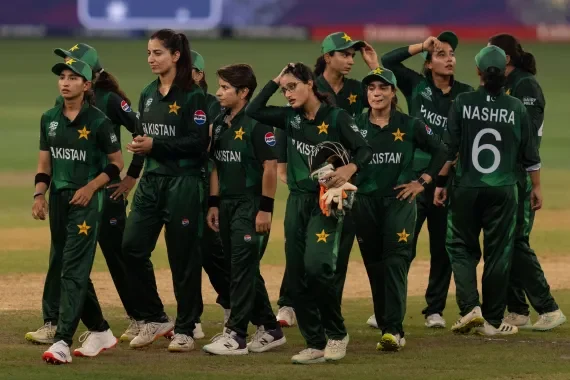
Pakistan’s most recent major tournament didn’t go the way the team would have wanted. Drawn into a difficult Group 1 alongside title contenders Australia, India and South Africa, Pakistan lost their first three matches of the 2026 ICC Women’s T20 World Cup, including a 64-run defeat to arch-rivals India at Edgbaston, before a heavy loss to Bangladesh in Southampton confirmed their elimination from semi-final contention with two group games still to play.
Pakistan did finish the tournament on a positive note, picking up a win over Netherlands in their final group match — their first win at this particular World Cup and, notably, only their third T20 World Cup victory in fifteen matches stretching back to a win over West Indies in 2020. Coach Wahab Riaz was candid about his disappointment with the campaign’s overall trajectory afterward, though context matters here: Pakistan have never reached the knockout stage of a women’s ICC global event, and being drawn into a group with three genuine title contenders out of six teams, with only two spots available for the semi-finals, left the team with a difficult path from the outset.
A Consistent T20 World Cup Presence, Without the Breakthrough
Despite the historical lack of Test cricket and the slow start to their ODI journey, Pakistan have actually appeared in every single edition of the ICC Women’s T20 World Cup held to date, giving the team a far more consistent presence in that particular format than their overall global standing might suggest. That consistency simply hasn’t translated into knockout results — across the last five editions of the tournament, Pakistan have won just one match apiece, typically finishing second-from-bottom in their group each time.
That pattern makes the program something of an outlier compared to teams with similar overall rankings, since regular tournament qualification without a corresponding breakthrough tends to raise different questions than missing out on events altogether. For Pakistan specifically, the conversation among fans and analysts has increasingly shifted toward squad depth and conversion — turning competitive periods within matches into complete wins — rather than simply reaching the tournament in the first place.
The India Rivalry
As with every team in the region, Pakistan’s matches against India draw disproportionate attention regardless of the tournament stakes involved. The head-to-head record heavily favours India across formats — Pakistan are yet to beat India in a Women’s Asia Cup fixture despite facing them eleven times, and India have also won all of their recent ODI meetings between the sides, including a comfortable 88-run win at the 2025 Women’s World Cup in Colombo.
Pakistan have reached the Women’s Asia Cup final twice in the tournament’s history, in 2012 and 2016, losing narrowly to India on both occasions by margins of 19 and 17 runs respectively. Those near-misses remain some of the highest-profile moments in the program’s history, even without the trophy to show for them, and every fresh India-Pakistan fixture continues to draw crowds and broadcast interest well beyond what either side’s other group matches typically generate.
Key Players to Know
Beyond captain Fatima Sana, who leads from the front with both bat and ball as a genuine all-rounder, Pakistan’s squad has produced several players capable of matching the best in the world on their day. Opening batter Sidra Amin has become one of the side’s most reliable performers in ODI cricket, including a fighting 81 against India at the 2025 World Cup that briefly threatened an upset chase. Wicketkeeper-batter Muneeba Ali offers stability at the top of the order across formats, while veteran all-rounder Nida Dar remains one of the most experienced campaigners in the squad, having become Pakistan’s all-time leading wicket-taker in T20I cricket.
The squad also continues to blend in younger talent through Pakistan’s developing domestic pathway, with players earning maiden call-ups and gradually gaining international experience alongside the senior core. The Pakistan Cricket Board has placed growing emphasis on structured domestic competitions as a feeder system for the national side, a shift that mirrors what other boards in the region have done to accelerate player development, even if Pakistan’s domestic structure remains less developed than the franchise-driven pathways now established in India and Australia.
A Program Still Finding Its Footing
Pakistan’s broader international results over the past couple of years capture a team that’s competitive without yet being consistently dangerous against the sport’s very best. A tour of South Africa in early 2026 saw Pakistan lose both the ODI and T20I series 2-1, though Fatima Sana was named Player of the Series in the T20I leg despite the series defeat — a sign of individual quality even when results haven’t gone the team’s way collectively.
That result followed a genuinely standout moment from a couple of years earlier, when Pakistan whitewashed South Africa 3-0 in a home ODI series in Karachi in September 2023, proof that the team is capable of beating higher-ranked opposition when conditions and form align — a result that remains one of the most-cited examples of the squad’s ceiling when everything comes together on a single tour.
For the latest fixtures, squad news and match reports, ICC’s official Pakistan team page is the best primary source, while ESPNcricinfo’s Pakistan Women coverage offers detailed statistics and match-by-match reporting. Our news section also covers Pakistan’s fixtures and squad announcements alongside every other major women’s team.
Building for the Future
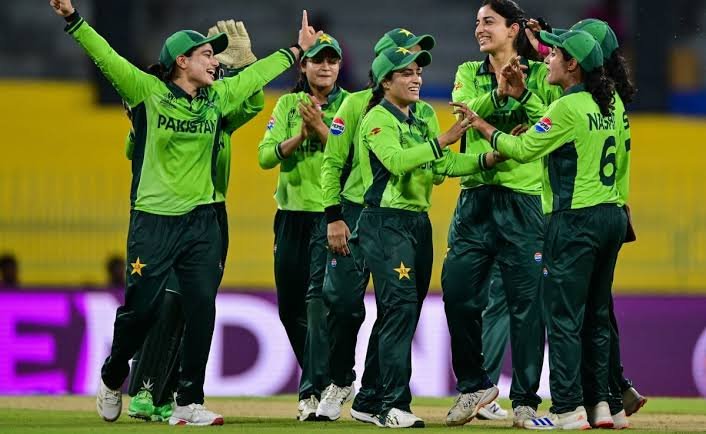
What Pakistan’s recent record suggests, more than anything, is a program in transition — genuinely talented individual players, a coaching setup increasingly built around experienced former internationals, and flashes of real quality against strong opposition, but not yet the consistency needed to push deep into the biggest global tournaments. Closing that gap will likely depend heavily on how much further Pakistan’s domestic structure develops, giving more players the kind of regular high-pressure match experience that’s become common in nations with established franchise leagues, and on whether the current core of Fatima Sana, Sidra Amin, Muneeba Ali and Nida Dar can be backed up by a genuinely deep bench rather than a handful of standout individuals.
For a team that’s still searching for its first appearance in the knockout stage of a global ICC event, the ambition is clear even if the results haven’t fully caught up yet. Every World Cup cycle brings a slightly deeper, slightly more experienced squad, and the challenge now is turning that gradual progress into the kind of tournament run that’s eluded the program throughout its history — the kind of breakthrough that would change how the rest of the cricketing world talks about this squad.
Frequently Asked Questions
Who is the captain of the Pakistan Women’s cricket team? Fatima Sana, a 24-year-old all-rounder who has captained the side at the 2024 and 2026 T20 World Cups.
How did Pakistan Women perform at the 2026 T20 World Cup? Pakistan were eliminated in the group stage after losing their first three matches, before finishing with a win over Netherlands in their final group game.
Has Pakistan Women ever reached the final of an ICC global event? No — Pakistan have never advanced past the group stage of a women’s ICC global tournament, though they have reached the Women’s Asia Cup final twice, in 2012 and 2016, losing both times to India.
Has Pakistan Women played Test cricket recently? No — Pakistan have played only three Test matches in their history, with the most recent coming in 2004 against West Indies. The team has not featured in Test cricket in over two decades.
Where does Pakistan rank in ICC Women’s rankings? Pakistan are currently ranked eighth in both the Women’s ODI and Women’s T20I team rankings.
Who is Pakistan Women’s head coach? Wahab Riaz serves as team mentor and head coach for major tournaments, with Taufeeq Umar as batting coach and Kamran Hussain as bowling coach.
Has Pakistan ever beaten a top-ranked team in women’s cricket? Yes — Pakistan whitewashed South Africa 3-0 in a home ODI series in Karachi in September 2023, one of the program’s most significant results against higher-ranked opposition.
Who is Pakistan Women’s all-time leading T20I wicket-taker? Veteran all-rounder Nida Dar holds that record, having overtaken Australia’s Megan Schutt to become the format’s leading wicket-taker in 2024.