The Hundred Women: Complete Guide to Teams, Format & Winners
Five seasons in, The Hundred Women’s Competition has settled into something genuinely distinctive on the women’s cricket calendar — not quite T20, built around a ball-counting format that splits opinion among traditionalists, but undeniably effective at drawing new crowds into English cricket grounds. With the 2026 season currently underway across England and Wales, here’s the complete picture of how the competition works, who’s won it, and where things stand this year.
What Makes The Hundred Different
The Hundred is a franchise cricket competition run by the England and Wales Cricket Board, featuring eight city-based teams for both a men’s and a women’s tournament played in parallel. What sets it apart from T20 or any other white-ball format is the ball-counting system itself: instead of overs of six balls each, each innings consists of 100 balls total, delivered in blocks of five (with the option for a bowler to deliver ten in a row from one end). Bowlers can switch ends after every set of five balls, and there’s a strategic timeout built into each innings — small tweaks, but ones that change the rhythm of an innings compared to a standard T20 match.
The format was designed deliberately to strip away some of cricket’s more confusing conventions for newcomers — a straightforward ball countdown rather than tracking overs, and match lengths kept short enough to fit a broadcast window comfortably. Whether that trade-off is worth it remains a genuine debate among fans, but there’s little argument about its effect on attendances — women’s matches in this competition have regularly drawn some of the biggest crowds seen anywhere in the women’s domestic game.
The Tactical Wrinkles That Make It Different
Beyond the basic ball-counting gimmick, the format actually creates some genuinely interesting tactical decisions that don’t exist in a standard T20 match. The ability to bowl ten balls in a row from one end, rather than being capped at six, means a bowler having a great day can stay on far longer than a T20 captain would ever allow, potentially bowling a full fifth of the innings themselves if the numbers work out and the captain trusts them enough. That changes bowling changes strategy considerably — teams can build an entire bowling plan around a single standout performer in a way six-ball overs simply don’t permit.
The single strategic timeout per innings, usually taken by the fielding side, also adds a tactical beat that doesn’t exist in T20 cricket, giving captains a formal pause to regroup and reset field placements at a moment of their choosing rather than only between overs. Small details like these are part of why some current and former players have actually come to prefer the format once they’ve played enough of it, even if the initial reaction from traditionalists tended to be skeptical.
The Eight Teams
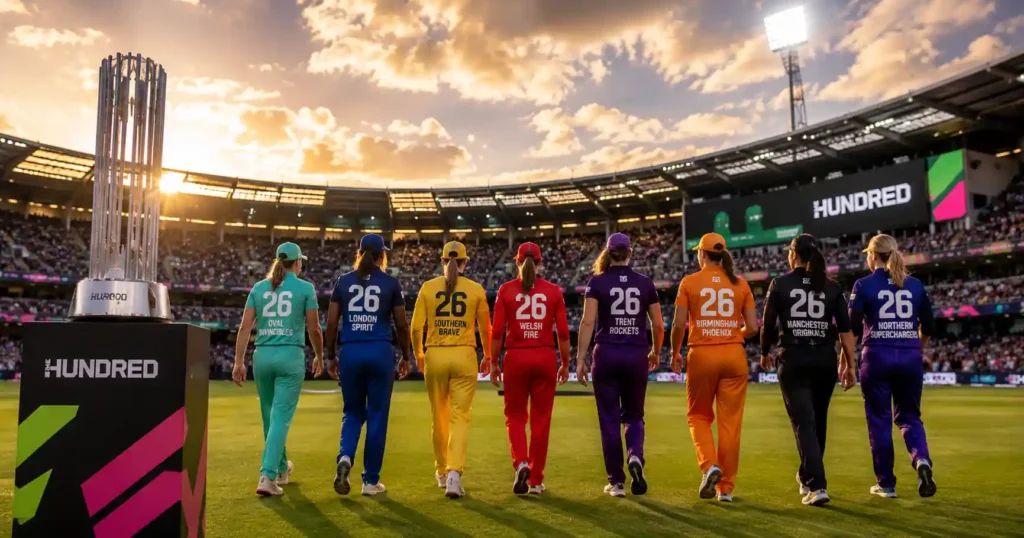
Every team in The Hundred is named after or closely tied to a host city, sharing venues and, in most cases, general branding with the equivalent men’s franchise:
- Oval Invincibles (London, at the Kia Oval)
- London Spirit (London, at Lord’s)
- Southern Brave (Southampton)
- Welsh Fire (Cardiff)
- Trent Rockets (Nottingham)
- Birmingham Phoenix (Birmingham)
- Manchester Originals (Manchester)
- Northern Superchargers (Leeds)
Each squad blends contracted England players with an international overseas contingent, giving the competition a genuinely global player pool despite being a domestic English tournament at its core. Squads are assembled through a mix of central retentions and an annual draft process, which means, much like the WPL’s auction system, rosters can shift meaningfully from one season to the next as teams balance retaining their most valuable players against bringing in fresh overseas talent.
Every Season’s Winner So Far
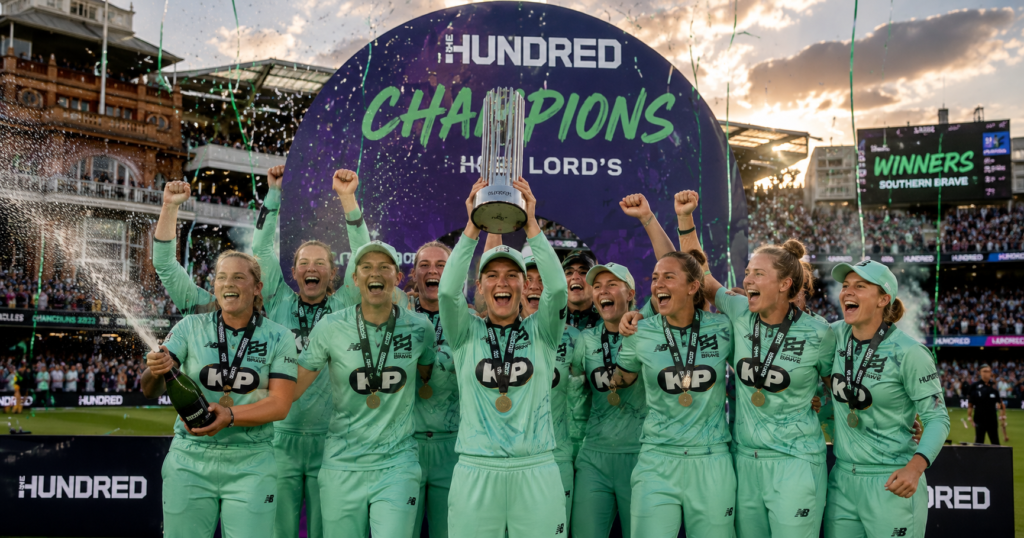
2021 — Oval Invincibles. The inaugural champions beat Southern Brave comfortably by 48 runs in the first-ever Hundred Women’s final, setting the tone for what became an early run of dominance.
2022 — Oval Invincibles. The Invincibles went back-to-back, beating Southern Brave again — this time by five wickets — with Suzie Bates leading the batting and emerging bowlers like Alice Capsey making an early mark.
2023 — Southern Brave. After two runner-up finishes, Southern Brave finally broke through, beating Northern Superchargers by 34 runs behind a dominant campaign from bowler Georgia Adams, who took a tournament-high 16 wickets that season.
2024 — London Spirit. Spirit’s maiden title came via one of the more dramatic routes in the competition’s history — a rain-affected group game handed them a crucial point, they then beat two-time champions Oval Invincibles by eight wickets in the Eliminator, before completing the run with a four-wicket win over Welsh Fire in the final under Heather Knight’s captaincy.
2025 — Northern Superchargers. Superchargers claimed their first title, beating Southern Brave by seven wickets in the final under Hollie Armitage’s leadership, with Phoebe Litchfield named Player of the Tournament for her consistent performances with the bat throughout the campaign.
That gives Oval Invincibles the most titles with two, though four different franchises have now won the competition across its first five seasons — a spread that suggests the tournament hasn’t settled into the kind of one or two-team dominance that’s emerged in some other franchise leagues, and it’s part of why the competition draws genuine neutral interest each year rather than fans simply expecting the same one or two teams to contest the final again.
Inside the 2026 Season
The 2026 edition is currently underway, with matches running through late July and into early August across all eight host venues. As things stand, early standout performances have included Georgia Voll’s strong tournament with the bat for Welsh Fire, Sophia Dunkley’s form at the top of the order for Trent Rockets, and Sophie Devine continuing to be a dangerous presence for Welsh Fire near the top of the run charts. On the bowling side, Marizanne Kapp has been among the tournament’s most economical performers for London Spirit, while Sophie Molineux has picked up wickets consistently for Southern Brave.
The finals day, as always, will be held at Lord’s, continuing the tradition established since the competition’s first season of using the home of cricket as the stage for both the men’s and women’s title deciders. For the latest points table and standings as the group stage plays out, ESPNcricinfo’s Hundred Women’s coverage tracks every match, net run rate calculation and result in real time.
How to Watch
The Hundred is broadcast extensively across the UK, with matches shown on Sky Sports and select fixtures also available free-to-air on the BBC — a deliberate ECB strategy aimed at maximising reach for newer fans who might not otherwise have access to cricket coverage behind a paywall. For international audiences, various broadcast partners carry the competition depending on region. For the official schedule, ticketing information and team news, The Hundred’s official website is the best primary source, and our own news section covers standout performances and results from the competition alongside the rest of the international women’s game.
How It Compares to Other Franchise Leagues
The Hundred sits alongside the Women’s Premier League and Australia’s Women’s Big Bash League as one of the three major domestic T20-style franchise competitions in the women’s game, though its unique ball-counting format sets it apart structurally from both. Where the WPL and WBBL both operate on the familiar six-ball-over T20 structure, The Hundred’s every-hundred-balls approach means direct statistical comparisons between the leagues — run rates, strike rates calculated per over — don’t translate quite as cleanly. We’ve covered the WPL’s own format and history in detail in our Women’s Premier League guide, which is worth reading alongside this one if you’re trying to compare how the major domestic leagues stack up against each other.
What all three leagues share is the same underlying purpose: giving contracted international players a lucrative, high-visibility domestic stage outside of bilateral series and ICC events, while accelerating the development of emerging domestic talent through direct exposure to some of the best players in the world. Players who might only get a handful of international matches a year for their home nation increasingly build the bulk of their season around a combination of these three leagues plus whatever international fixtures their board schedules around them.
Why Attendances Keep Growing
One of the more genuinely notable stories around The Hundred Women specifically has been crowd growth. Since the competition doubled down on scheduling marquee women’s fixtures as standalone matches rather than exclusively as double-headers tucked before the men’s game, attendances at several grounds have climbed significantly, with some fixtures posting numbers that rival what English domestic women’s cricket had rarely seen before this competition launched.
That shift matters beyond just the numbers on a given afternoon. Broadcasters and sponsors respond directly to demonstrated crowd interest, and a competition that can point to consistently strong attendances for standalone women’s fixtures has a much easier case to make for continued investment, better scheduling slots, and expanded broadcast coverage in future seasons. It’s part of a broader pattern across the sport — investment tends to follow visible audience interest, and The Hundred Women has increasingly given boards and broadcasters real evidence to point to.
What to Watch For Going Forward
With four different champions across five seasons and Oval Invincibles the only franchise to have won more than once, the competition remains genuinely open heading into most years — a contrast to some franchise leagues elsewhere where one or two teams have pulled clear of the pack. Manchester Originals and Birmingham Phoenix remain the two franchises yet to reach a Hundred Women’s final, and closing that gap is likely to depend on how well each side builds its squad through the annual player draft process that sets rosters ahead of each new season.
For a tournament that was initially met with plenty of skepticism from traditional cricket fans over its unconventional format, five seasons of competitive finals, rising attendances, and a genuinely unpredictable list of champions have gone a long way toward making the case that The Hundred Women has carved out a lasting place in the sport’s calendar.
Frequently Asked Questions
How does The Hundred’s scoring format actually work? Each team faces 100 balls per innings, delivered in blocks of five rather than traditional six-ball overs, with bowlers able to switch ends after each set of five and the option to bowl ten balls in a row from one end.
How many teams play in The Hundred Women’s Competition? Eight franchises: Oval Invincibles, London Spirit, Southern Brave, Welsh Fire, Trent Rockets, Birmingham Phoenix, Manchester Originals and Northern Superchargers.
Who has won the most Hundred Women’s titles? Oval Invincibles, with two titles, winning back-to-back in 2021 and 2022. Southern Brave, London Spirit and Northern Superchargers have each won one title since.
Who won The Hundred Women’s Competition in 2025? Northern Superchargers beat Southern Brave by seven wickets in the final at Lord’s, with Phoebe Litchfield named Player of the Tournament.
Where is The Hundred Women’s final played each year? Lord’s Cricket Ground has hosted the final of every season since the competition’s launch in 2021.
Where can I watch The Hundred Women’s Competition? Matches are broadcast in the UK on Sky Sports, with select fixtures also shown free-to-air on the BBC.
How does The Hundred Women’s Competition compare to the WPL and WBBL? All three are major domestic T20-style leagues for women’s cricket, but The Hundred uses a distinct 100-ball format rather than the traditional six-ball-over structure the WPL and WBBL both share, which makes direct statistical comparisons between the leagues less straightforward.
For a competition that’s still finding its footing among cricket traditionalists in some quarters, five seasons of rising attendances, genuine unpredictability at the top of the table, and a growing list of standout individual performances suggest The Hundred Women is here to stay as a fixture of the English summer.