Women’s Premier League: The Complete Guide to WPL Cricket
In just four seasons, the Women’s Premier League has gone from a genuine experiment to arguably the most important club competition in the sport. It’s reshaped how Indian players develop, given international stars a lucrative new stage to play on, and produced one of the most oddly specific rivalries in franchise cricket — a Delhi Capitals side that has reached every single final so far and lost every single one. Here’s the full picture of how the WPL works, what’s happened across its four seasons, and why it’s become such a big deal for the sport as a whole.
What the WPL Actually Is
The Women’s Premier League is a franchise Twenty20 competition organised by the Board of Control for Cricket in India, effectively serving as the women’s counterpart to the IPL. It launched in 2023 as the successor to the Women’s T20 Challenge — a much smaller exhibition tournament that ran from 2018 to 2022, starting as a single match and gradually expanding to a three-team, four-match event before the BCCI committed to a full standalone league.
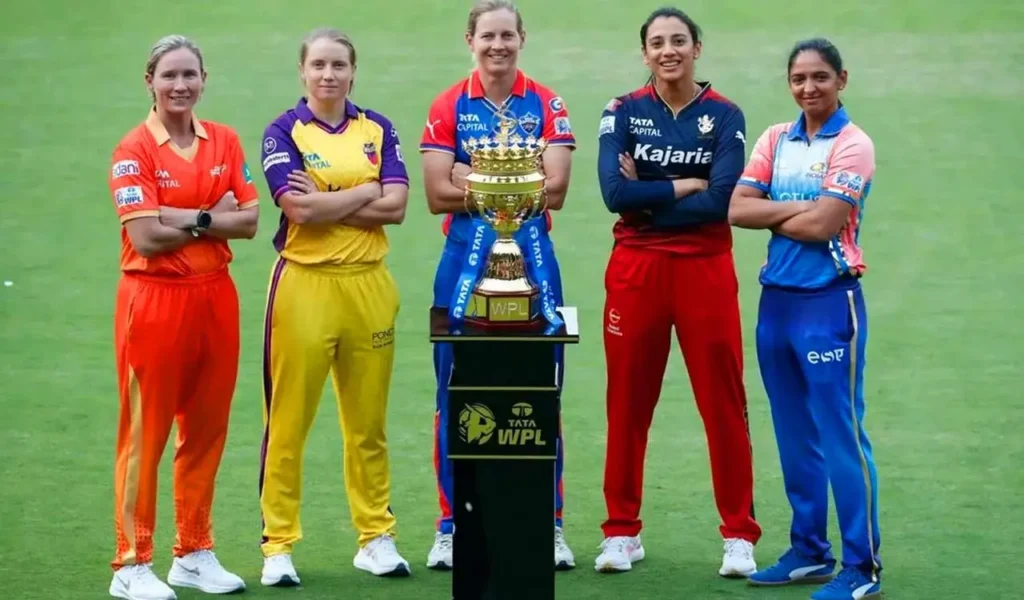
Five franchises currently compete: Mumbai Indians, Royal Challengers Bengaluru, Delhi Capitals, Gujarat Giants and UP Warriorz. Each of those franchises shares ownership or branding with an existing IPL team, giving the league an instant head start in terms of fan recognition and marketing infrastructure that a completely new set of franchises wouldn’t have had — a deliberate decision by the BCCI to build audience familiarity into the league from day one rather than asking fans to invest in entirely unfamiliar brands.
How the Tournament Format Works
The WPL follows a double round-robin format among its five teams, meaning every franchise plays every other franchise twice during the league stage. Since 2026, that group stage runs on a fixed window in the international calendar between January and February, giving the tournament a settled place in the schedule rather than shifting around other commitments the way its first three editions did.
Once the round-robin stage wraps up, the team finishing on top of the table qualifies directly for the final. The second and third-placed sides then meet in an Eliminator, with the winner of that match advancing to face the table-toppers in the final itself. It’s the same basic structure used by the IPL and several other major T20 leagues, designed to reward consistent performance across the group stage while still leaving the door open for a team that peaks at the right moment.
Every WPL Season So Far
2023 — Mumbai Indians. The inaugural season saw Mumbai Indians claim the first title, setting the tone for what’s become one of the league’s two dominant franchises.
2024 — Royal Challengers Bengaluru. RCB claimed their first title in the second edition, beating Delhi Capitals in the final — the first of what’s become an unfortunate pattern for Delhi.
2025 — Mumbai Indians. Led by Harmanpreet Kaur and powered by performances from Nat Sciver-Brunt, Amelia Kerr and Shabnim Ismail, Mumbai Indians became the first franchise to win the title twice, beating a Meg Lanning-led Delhi Capitals side by eight runs in the final after finishing second in the league stage and coming through the Eliminator against Gujarat Giants.
2026 — Royal Challengers Bengaluru. RCB finished on top of the table in the fourth edition and completed a six-wicket chase in the final to beat Delhi Capitals once again, with Smriti Mandhana named Player of the Match. It was RCB’s second title in four seasons, drawing them level with Mumbai Indians at the top of the all-time standings.
That leaves the head-to-head record after four seasons remarkably tidy: Mumbai Indians and Royal Challengers Bengaluru have won two titles apiece, and between them they’ve claimed every single WPL trophy so far.
Standout Performers Across the League’s History
A handful of players have established themselves as the league’s defining figures across its four seasons. Smriti Mandhana has been a fixture near the top of the run-scoring charts nearly every year, and her Player of the Match performance in the 2026 final added another signature moment to a résumé that’s made her one of the tournament’s most consistent match-winners.
Overseas stars have also left a significant mark on the competition — the likes of Nat Sciver-Brunt and Amelia Kerr have been central to Mumbai Indians’ two title wins, while Meg Lanning’s captaincy stint at Delhi Capitals, even without a trophy to show for it, has been widely credited with helping establish the franchise as a perennial contender rather than making finals purely on individual brilliance.
On the bowling side, spinners have generally had the upper hand across most WPL seasons, reflecting a broader trend in T20 cricket on Indian surfaces, though genuine pace has had its moments too, with overseas quicks bringing a different kind of threat that’s occasionally proven decisive in tighter run-chases. The auction system means these players don’t always stay with the same franchise year after year, which adds an extra layer of intrigue each season as fans wait to see which combinations of star players end up on the same roster.
A Quick Look at Each Franchise
Mumbai Indians have been the league’s most consistently successful franchise, with two titles from four seasons under Harmanpreet Kaur’s captaincy, built around a strong overseas core that’s included Nat Sciver-Brunt and Amelia Kerr.
Royal Challengers Bengaluru matched that success with their own two titles, anchored by Smriti Mandhana’s batting and a squad that’s generally balanced overseas power-hitting with reliable Indian spin options.
Delhi Capitals remain the league’s most consistent finalists without a trophy, reaching every final so far behind strong top-order batting but coming up short at the final hurdle each time.
Gujarat Giants have yet to reach a WPL final, though the franchise has produced competitive seasons and remains one of the two teams still chasing a first appearance in the title match.
UP Warriorz round out the five franchises, also still searching for their first final appearance, with the team generally competitive through the group stage without yet putting together the knockout run needed to break through.
The Delhi Capitals Problem
No recap of the WPL’s history would be complete without addressing Delhi Capitals’ remarkable run of near-misses. Delhi have reached the final in all four seasons of the competition to date — a level of consistency that most franchises in any sport would be thrilled with — and lost every single one. It’s an almost unheard-of combination: reaching the championship match every year without a single title to show for it.
That pattern has made Delhi Capitals one of the more fascinating case studies in franchise cricket. The roster has generally been talented enough to get them through the group stage and past whichever team they meet along the way, featuring stars in a captaincy role alongside internationals like Shafali Verma and Jemimah Rodrigues in the batting order. Whatever’s gone wrong has tended to happen specifically on final day, which is exactly the kind of pattern that turns a good team into a genuine sporting curiosity.
Inside the 2026 Season
The fourth edition of the WPL ran from January 9 to February 5, 2026, opening with a rematch of the previous year’s dynamic between two-time champions Mumbai Indians and 2024 winners Royal Challengers Bengaluru in Navi Mumbai. The tournament was played across two venues — the first eleven matches, including two double-headers, at the DY Patil Stadium in Navi Mumbai, before the remaining action shifted to the Kotambi Stadium in Vadodara for the back half of the schedule, including the Eliminator on February 3 and the final on February 5.
That final was notable for being scheduled on a weekday, a Thursday, rather than the weekend slot the competition had used in previous years — a scheduling quirk driven by a genuinely packed few weeks on the wider cricket calendar, with the men’s Under-19 World Cup wrapping up the day after the WPL final and the men’s T20 World Cup starting the day after that. Royal Challengers Bengaluru got through to the final by beating UP Warriorz in the Eliminator, while Delhi Capitals came through their fourth straight Eliminator-to-final run behind contributions from their bowling and top-order batting.
The mega auction for the 2026 season was held on November 27, 2025, in New Delhi, setting the rosters for all five franchises ahead of the January start. Ten days after the tournament wrapped up, India’s senior women’s team moved straight into an all-format tour of Australia, underlining just how tightly the WPL is now woven into the broader international calendar rather than sitting as a standalone exhibition.
Why the WPL Matters Beyond the Trophy
The league’s real significance goes well beyond who’s won it. Before the WPL existed, promising Indian domestic players had very few chances to test themselves against the best international talent outside of a handful of bilateral series and ICC events each year. The WPL changed that overnight, giving young Indian players regular exposure to genuine world-class overseas stars, high-pressure knockout cricket, and coaching set-ups built around professional standards the domestic structure hadn’t previously offered at this scale.
That shift shows up clearly in how India’s senior national team has evolved since the league’s launch — newer faces arriving in the international set-up with considerably more big-match experience than earlier generations typically had at the same age, a pattern we’ve covered in more detail in our guide to the India Women’s national team. It’s also raised the profile and pay of women’s cricket in India more broadly, with the auction process itself now generating significant media coverage each year as franchises compete for the world’s best players.
The Auction System Explained
Unlike a traditional transfer market, WPL squads are built almost entirely through a player auction held ahead of each season, where franchises bid against each other for a pool of available domestic and international players within a fixed salary cap. That system has a couple of knock-on effects worth understanding.
First, it means squad turnover between seasons can be significant — a marquee player at one franchise one year can end up at a completely different team the next, depending on whether they’re retained or released back into the pool. Second, it puts a genuine premium on versatile players, since franchises are essentially assembling a balanced squad from scratch each auction cycle rather than building incrementally around a settled core the way some other sports leagues allow.
That auction-driven structure is part of why WPL rosters can look meaningfully different from one year to the next, even for franchises that have generally stayed competitive, and it’s a big part of why the pre-season auction itself has become such a closely followed event among fans trying to gauge how each team’s chances look heading into the new campaign.
Broadcasting and Where to Watch
Star Sports Network holds the broadcasting rights for the WPL, showing matches on television across its network of channels, while JioHotstar carries the tournament as an exclusive livestreaming partner via its website and app. For fans wanting to follow squad news, auction results and match reports as the next season approaches, the official WPL section of the BCCI’s website is the primary source for schedules and franchise information, and ESPNcricinfo’s WPL coverage provides detailed statistics, scorecards and records for every match played across all four seasons.
Our own news section covers WPL storylines alongside the rest of the international women’s game, and our rankings and records guide covers how individual WPL form tends to feed into the wider international picture for the players involved.
What to Watch For Going Forward
With Mumbai Indians and Royal Challengers Bengaluru now tied at two titles apiece, the obvious storyline heading into future seasons is whether either franchise can pull clear as the league’s dominant power, or whether Delhi Capitals can finally convert one of their finals appearances into an actual trophy. Gujarat Giants and UP Warriorz, meanwhile, remain the two franchises yet to reach a final at all, and closing that gap is likely to depend heavily on how well each side builds its roster at future auctions.
There’s also the broader question of how the WPL’s continued growth affects the international game. As more boards around the world watch the tournament’s impact on Indian players specifically, it’s a reasonable bet that other cricket boards will keep looking for ways to replicate at least part of that model domestically, even if very few nations currently have the financial scale to build something directly comparable.
Australia’s WBBL and England’s The Hundred both offer their own versions of this model, and comparisons between the three leagues have become an increasingly common talking point among fans debating which domestic structure is doing the most for the international game overall — a comparison we’ll cover in more detail in a dedicated look at how the WBBL and The Hundred stack up against the WPL.
For now, the WPL remains the clearest example in women’s cricket of what a well-funded, well-marketed domestic T20 league can do for a national team’s overall depth in just a few short years — and with two franchises still chasing their first trophy and one chasing its third, there’s no shortage of storylines heading into whatever comes next for a competition that’s still only four seasons into its existence.
Frequently Asked Questions
Who has won the most Women’s Premier League titles? Mumbai Indians and Royal Challengers Bengaluru have each won two titles across the tournament’s four seasons — Mumbai Indians in 2023 and 2025, and Royal Challengers Bengaluru in 2024 and 2026.
Why hasn’t Delhi Capitals ever won the WPL? Delhi Capitals have reached the final in all four seasons of the competition so far but have lost every one of them, an unusual run of consistency without a title to show for it.
How many teams play in the Women’s Premier League? Five franchises: Mumbai Indians, Royal Challengers Bengaluru, Delhi Capitals, Gujarat Giants and UP Warriorz.
When is the WPL played each year? Since the 2026 season, the WPL has a fixed window in the international cricket calendar between January and February. Earlier seasons were played in February and March.
Who won the WPL 2026 final? Royal Challengers Bengaluru beat Delhi Capitals by six wickets in the final at Vadodara, with Smriti Mandhana named Player of the Match.
Where can I watch WPL matches? Star Sports Network holds the broadcasting rights for television coverage, while JioHotstar streams every match live via its website and app.
How are WPL squads selected each season? Through a player auction held before each season, where the five franchises bid for available domestic and international players within a fixed salary cap, rather than a traditional transfer system.